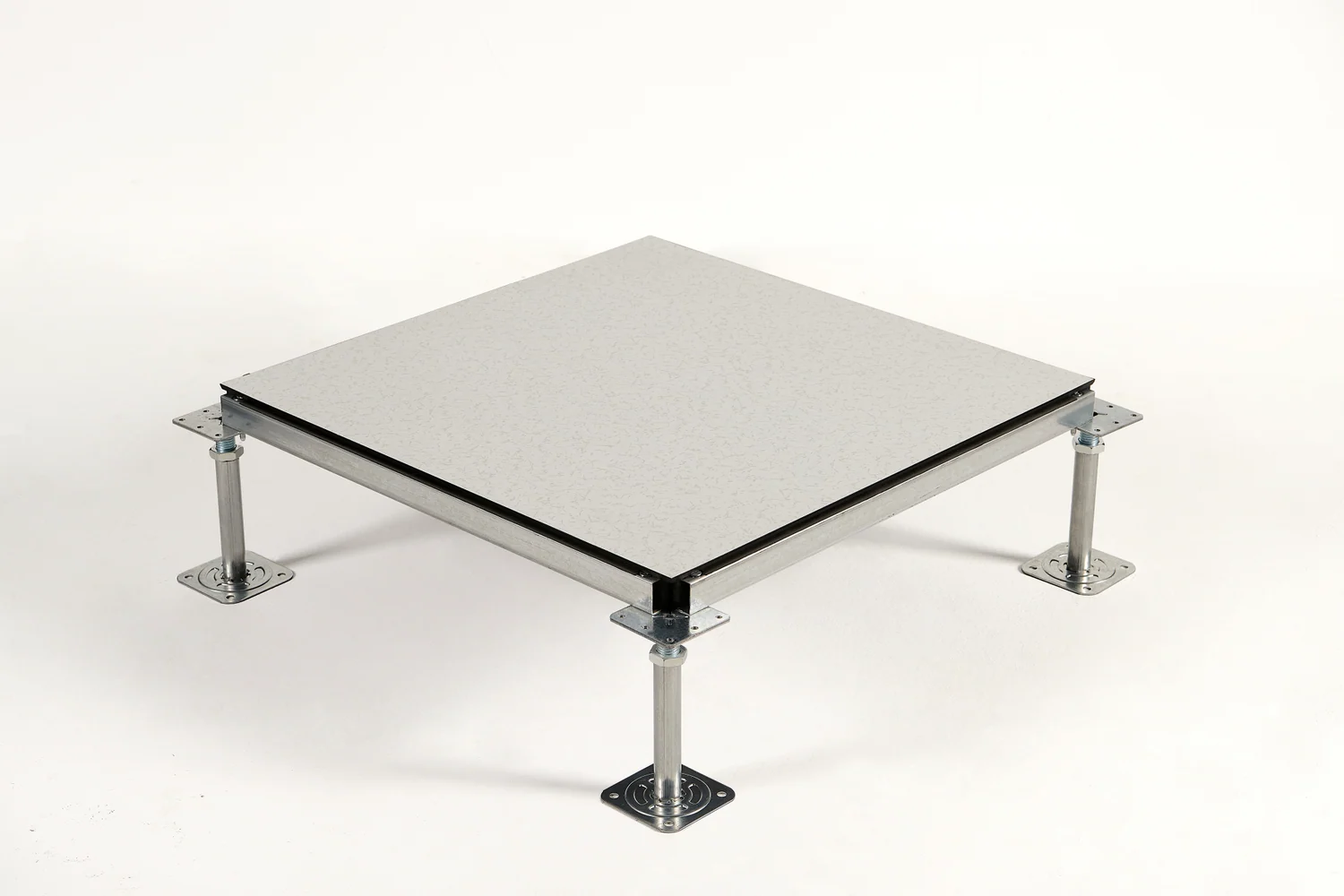
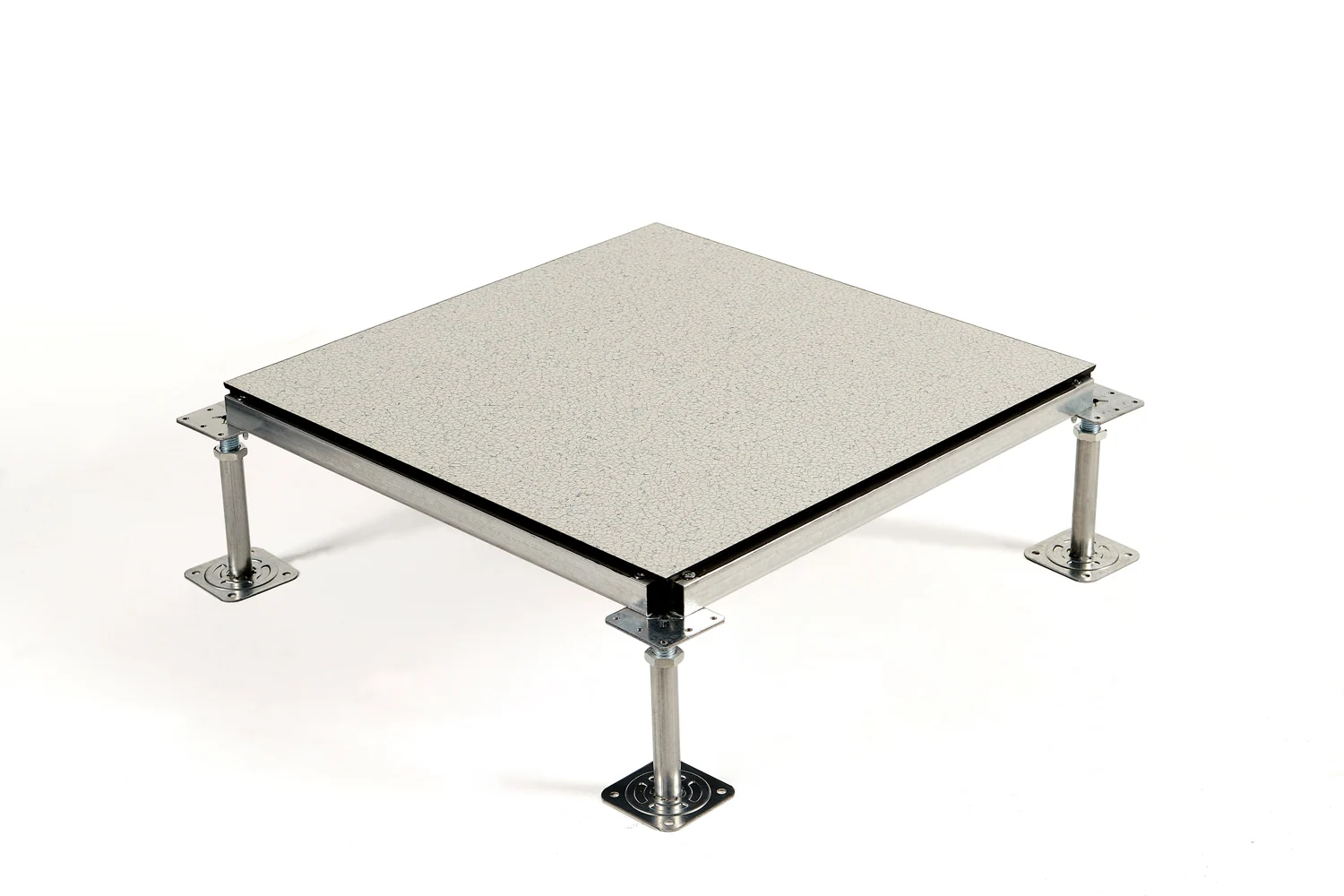
Start with HPL.
HPL is the primary finish for Panelway DC Series. Vinyl is an option where the project calls for a particular PVC facing grade. Include airflow panels where the cooling design uses underfloor air distribution.
Explore DC Series ↗ Request a Quote ↗
Both use cementitious infill steel panels with flat-head pedestals and stringers. The finish and project requirements determine the choice.
| Selection point | HPL | Vinyl |
|---|---|---|
| Product family | STXXX-H; HN no-trim option | STXXX-V; VN no-trim option |
| Primary series | DC and CR | CR; project option for DC |
| Support | Flat-head pedestals + bolted stringers | Flat-head pedestals + bolted stringers |
| Panel dimensions | 600 × 600 mm; 35 mm nominal thickness | 600 × 600 mm; 35 mm nominal thickness |
| Electrical requirement | Use the HPL facing sample data and the project-required test conditions; complete-floor performance is specified separately | PVC facing specifications: conductive 10⁴–10⁶ Ω; static-dissipative 10⁶–10⁹ Ω. Specify grade, method and actual floor configuration |
| Load selection | Select the H / HN panel model to match the required loads | Select the V / VN panel model to match the required loads |
Reference: CAD V4.0 · p2–5. Overall panel height varies with model. Select load and electrical requirements for the complete floor configuration.
Both finishes are applied to cementitious infill steel raised floor panels. Choose the facing for the room’s use and electrical requirements, then select the panel model, support and floor height together.
HPL is the primary finish for Panelway DC Series. Vinyl is an option where the project calls for a particular PVC facing grade. Include airflow panels where the cooling design uses underfloor air distribution.
Explore DC Series ↗HPL and Vinyl are primary options for Panelway CR Series. Compare physical samples, electrical requirements and the project’s cleaning and maintenance routine alongside the panel specification.
Explore CR Series ↗PVC facings offer conductive 10⁴–10⁶ Ω and static-dissipative 10⁶–10⁹ Ω grades. For either finish, match the selected facing, grounding arrangement and test method to the installed floor requirements.
Review finish and ESD requirements ↗Both use cementitious infill steel panels with flat-head pedestals and stringers. Their surface materials and finish specifications differ. Compare maintenance, colour, electrical requirements and intended use before selecting the panel model.
No. Select the finish grade, resistance range, test method and grounding arrangement for the installed floor. Facing material data and complete-floor test results apply to their stated configurations.
Yes. Both are primary options for CR Series. HPL is the primary DC Series finish, while Vinyl can be selected for project-specific requirements.
Use the panel drawings to select the construction, edge detail and load model. Compare facing colours, thickness options and material properties in the HPL and PVC datasheets. Specify facing performance and panel load requirements together for your project.
Application, area, finished floor height, loads and finish requirements are enough to start. Add airflow or ESD details where relevant.